
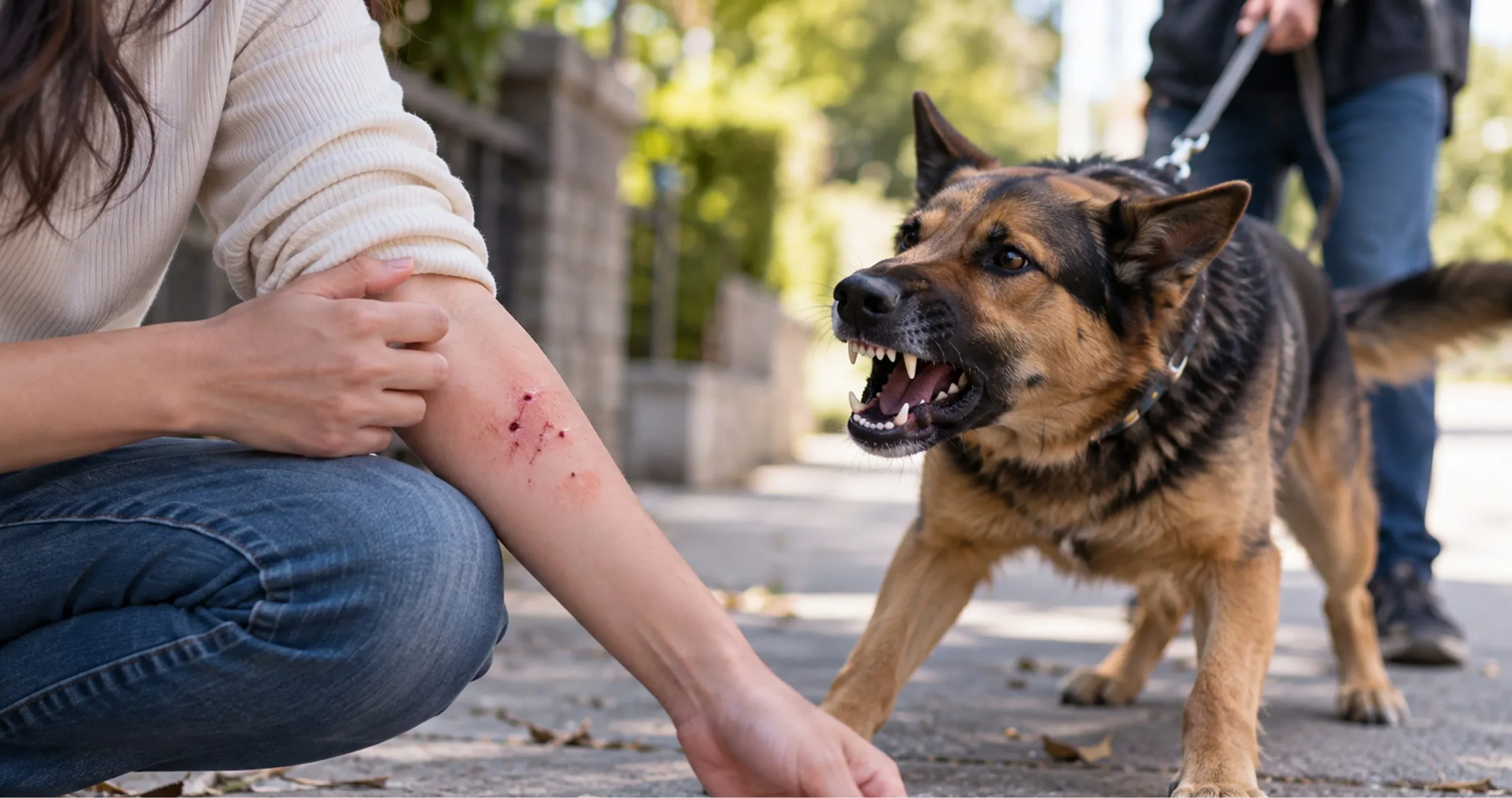
Missouri Dog Bite Laws Every Dog Owner and Victim Should Know
After a truck accident, standard advice is to get medical attention, report the crash, exchange information, and speak…
If you’ve been bitten by a dog in Missouri, you may assume you need to prove the dog had bitten someone before, and if you own a dog that’s bitten someone, you may be hoping the opposite is true. Neither assumption holds up under Missouri law.
One of the biggest misconceptions surrounding dog bite cases is that a victim has to show a prior history of aggression, or that the owner knew the dog was dangerous. Missouri law doesn’t require either.
Under Missouri’s dog bite statute, an owner or possessor can be held strictly liable when a dog bites a person without provocation while that person is on public property or lawfully on private property, regardless of whether the dog has ever bitten anyone before.
What Do Missouri Dog Bite Laws Say
Missouri Revised Statutes § 273.036 (2026) establishes strict liability for certain dog bites.
Three parts of the law are especially important:
- The dog must have bitten the person.
- The person must have been on public property or lawfully on private property.
- The bite must have occurred without provocation.
The statute also says that if the injured person is found to have contributed fault to the incident, the damages owed can be reduced by that same percentage of fault.
Does a Dog Get “One Free Bite” in Missouri
Not under Missouri’s dog bite statute.
The idea of a “one-bite rule” comes from laws in some jurisdictions where a victim must establish that the owner knew or should have known about a dog’s dangerous tendencies. Missouri’s statutory approach is different.
Section 273.036 specifically states that liability applies regardless of the dog’s former viciousness or the owner’s knowledge of that viciousness. A victim therefore does not have to prove that the dog had bitten someone before.
Does It Matter Whose Property the Bite Happened On?
Missouri’s statute applies whether the bite happens in public or on private property, including the dog owner’s own property, as long as the injured person was lawfully present.
- A person invited into a home or visiting a business is in a different legal position than someone who entered private property without permission.
- A social guest, delivery driver, or customer is typically covered; someone trespassing generally is not.
The specific facts of how and why someone was on the property need to be examined before liability is clear.
What Compensation Can a Dog Bite Victim Recover in Missouri?
A bite can leave costs that extend well beyond the initial emergency-room visit. Depending on the circumstances, a Missouri dog bite claim may involve compensation for losses such as:
- Emergency medical treatment
- Follow-up appointments
- Prescription medication
- Surgery
- Rehabilitation
- Lost wages
- Pain and suffering
- Scarring or disfigurement
- Other documented losses related to the injury
Missouri’s dog bite statute also provides for a fine of up to $1,000 for a person held liable under the statute. That fine is separate from the damages available to the injured person, and the statute states that its remedies are cumulative with other remedies available under Missouri law.
What Should You Do After a Dog Bite Accident?
The priority is the injury itself. Once you address immediate medical concerns, preserving information about the incident can make a difference later.
1. Get Medical Care
Dog bites can cause puncture wounds, tissue damage, infection, nerve injuries, and other complications. Follow the medical advice provided and keep records of treatment, prescriptions, bills, and follow-up care.
Even when an injury appears minor, medical documentation creates a record of what was observed and treated.
2. Identify the Dog and Its Owner
If it is safe to do so, obtain the owner’s name and contact information. Record information about the dog and any other details that can help identify the animal.
Do not put yourself at risk to obtain information from an aggressive dog or in an unsafe situation.
3. Photograph the Injury
Take clear photographs soon after the bite and during healing. Injuries can change considerably over the days and weeks that follow.
Photographs can show the wound’s initial condition and whether visible scarring or other changes developed later.
4. Identify Witnesses
Someone who saw the attack may remember details that the injured person does not.
Write down witness names and contact information while those details are still fresh. If the incident occurred near a business, apartment complex, park, or other location with surveillance cameras, note that as well.
5. Report the Incident When Required
Dog bite reporting requirements can vary by location and circumstances. Depending on where the incident occurred, animal control, local authorities, or public-health officials may need to be notified.
Keep a copy of any report or reference number connected to the incident.
Can a Victim Be Partly Responsible for a Dog Bite
A victim can be found partly responsible for a dog bite in Missouri.
For example, suppose a victim is bitten after reaching over a fence to pet an unfamiliar dog, and a court finds they were 20% responsible for provoking the encounter. If their damages total $10,000, their compensation would be reduced by that 20%, bringing the recovery to $8,000.
That does not mean an injured person loses the right to bring a dog bite claim; it only means the compensation may be adjusted based on the facts. Comparative-fault disputes are often the most contested part of a dog bite case, since the victim and dog owner may describe what happened very differently, and there isn’t always a neutral witness to settle the disagreement.
Protecting Your Rights After a Missouri Dog Bite
A dog bite case is not determined solely by whether an animal has bitten someone before. Victims who document the injury and preserve evidence can provide a clearer record of what happened and what the bite has cost.
For dog owners, understanding the law matters because liability does not depend solely on whether the animal has shown aggressive behavior in the past.
If a bite has resulted in significant injuries, disputed facts, or questions about compensation, Thompson Law can review the circumstances and explain the legal options available. Speaking with a St. Louis dog bite attorney can clarify how Missouri law applies to the specific incident before you decide how to proceed.
FAQs
if the bite caused medical bills, lost wages, scarring, pain, or other serious problems. Missouri law may allow a dog bite victim to seek compensation from the dog owner when the legal requirements are met. Not every bite needs a lawsuit, though. Some claims are resolved through an insurance settlement without going to court. The right choice depends on the severity of the injury, the available evidence, and how the insurance company responds.
The value of a claim can depend on medical expenses, the seriousness of the injury, lost income, pain and suffering, permanent scarring, and whether additional treatment is needed. A minor bite may have a much lower value than an attack that causes nerve damage, infection, or permanent facial scars. It is usually a good idea to understand the full extent of your injuries before accepting a settlement.
Stage 3 dog bite generally refers to a bite classification where the dog’s teeth penetrate the skin and cause one or more puncture wounds. The exact classification can vary depending on the bite scale being used. A Stage 3 bite can still cause significant injury, infection, and tissue damage, so medical attention is important even if the wounds appear small.
No. Missouri does not simply follow a traditional “one free bite” rule. Under Missouri law, a dog owner can be held responsible when a dog bites someone who was lawfully on public or private property, subject to the requirements of the state’s dog bite statute. This means a victim may have a claim even if the dog has never bitten anyone before.
Useful evidence can include photographs of the injuries, medical records, photographs of the location, witness statements, animal control reports, and information about the dog and its owner. Keep records of your medical treatment and any expenses or missed work related to the bite. If possible, document the injury as it heals because scarring and other changes may become more noticeable over time.